
| Things We Didn’t Say By Amy Lynn Green / Bethany House | Buy At Christianbook.com |
| Shop your local indie bookstore |
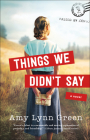
I just finished “Things We Didn’t Say” by Amy Lynn Green. Just after its debut day, I was so excited to pick up my copy from the local Indie Bookstore. Later when I flipped open the cover, I was caught by surprise. “Hold on a second,” I said. “An entire book written in letters? How did I miss this? Will I like it? I don’t know.” I couldn’t recall another similar literary offering that I had read. But upon reflection, I thought of two; The Screwtape Letters and The Guernsey Literary and Potato Peel Pie Society. I enjoyed both of these. With this recollection, I was convinced. An epistolary novel is a powerful form of expression.
I got over my initial speed bump and plunged in. With a few page turns, I was all in. There’s great movement in the plot. The multiple points of view made the story rich. At the end, I thought the characters were so vibrant. Each one essential to the story. I had my doubts with Olive’s missives but even her correspondence proved to be a key story element.
At the conclusion, I thought about the story of the prodigal son in the Bible. Not the returning prodigal son himself, but his brother. The one that would never go in and join the celebration due to his anger and unforgiving nature. I thought the letters did a good job of showing that often when presented with something that threatens our sense of justice we react just like the older brother. We lash out and harbor anger toward the person or situation that has rocked our world. Bitterness defines us. When the German POW’s came to the camp in the villagers’ northern Minnesota community, few were thinking about practicing hospitality, or letting their light shine, or showing God’s love. It was heartwarming to travel along with the characters on their path to greater understanding.
Fun surprises along the way lightened the mood and solved some mysteries. I’ll admit, I’m a little curious about the title. Why is it called “Things We Didn’t’ Say.” To me, the story is complete. It’s a homerun. The letters tell it all. As I think about it, I guess the title stems from the idea that the characters later expressed in letters what they neglected to say in the moment. Words left unspoken due to fear and bad timing. This certainly happened first with Johanna Berglund and Erik Sorenson, and later with Johanna and Peter.
Amy Lynn Green has crafted a thoroughly satisfying story. The book is part of my personal library, but it’s not likely to sit on the shelf for long. I’m looking forward to sharing it with my book buddies.
 Ridge Top Book Blog